

It's hard to remember the last time the Miami Dolphins had a good defense against an entire offensive unit. Even when they had solid cornerbacks on the boundary and hard-hitting safeties, there was one area they couldn't stop.
Through five games this season, the Dolphins' defense has improved, but that comes with the caveat that they still can't stop opposing tight ends. It's a problem that masks the good things they can do.
Even when they make their adjustments, the opposing team's tight ends are still making trouble and moving the chains. What makes it more frustrating is that the Dolphins offense hasn't had a great tight end in decades. Mike Gesicki was a good split TE/WR, but we would have to go back at least to Anthony Fasano in 2010 for a well-rounded TE. Maybe that's why the defense can't stop them.
Miami Dolphins' defense has to learn to stop allowing tight ends to control the games
It doesn't matter how good a defensive scheme is, or how well the boundary corners play, if a tight end can skip across the field, they will continue to make plays, and the rest of it won't matter.
- Week 1: Michael Mayer - 6 receptions, 32 yards
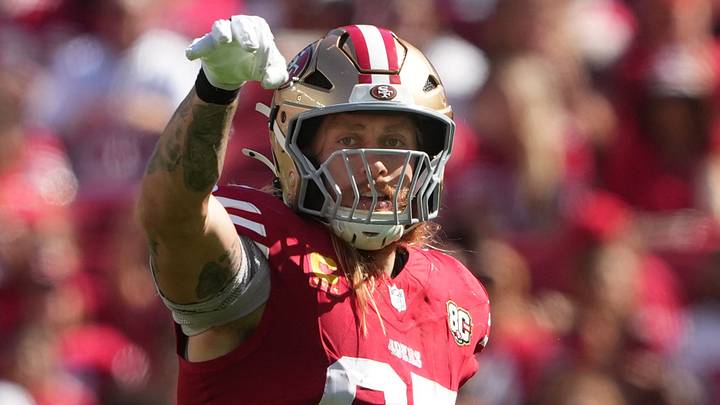
- Week 2: George Kittle - 4 receptions, 80 yards, 1 touchdown
- Week 3: Travis Kelce - 2 receptions, 59 yards, 1 touchdown
- Week 4: T.J. Hockenson - 13 receptions, 119 yards
- Week 5: Tanner Hudson - 3 receptions, 14 yards, 1 touchdown
Those numbers don't show the other TEs who made plays during those games. Miami has a problem consistently stopping tight ends, and if they are going to win this year, they have to stop the tight end from extending drives.
One of the bigger problems is that the Dolphins are not making contact at the line of scrimmage with the TEs at the snap. This allows them to run unobstructed into their routes. Quarterbacks don't have to search for them, as most of the time they are exactly where the play is designed for them to be.
This can change easily by hitting the TE within the first five yards and delaying his route or taking him out altogether. The numbers may not look bad on the surface, but a single lapse in coverage creates an advantage for the offense.
Week 1: Mayer - 3 first downs, 19 YAC (yards after the catch)
Week 2: Kittle - 3 first downs, 30 YAC
Week 3: Noah Gray - 2 first downs, 17 YAC
Week 3: Kelce - 2 first downs, 26 YAC
Week 4: Hockenson - 8 first downs, 36 YAC
Week 5: Erick All - 2 first downs, 14 YAC (3 receptions, 25 yards)
Week 5: Hudson - 1 first down, 5 YAC
Week 5: Mike Gesicki - 1 first down, 1 catch, 1 touchdown
Clearly, it's not just one TE making the plays; the better they are, the bigger the problem. The Dolphins have to shore this up as they come off their Week 6 bye. It's imperative to create problems for opposing QBs. It's the one area that everyone from the linebackers to the safeties can control, but they have to get hits on them off the line of scrimmage to reroute them, or it won't matter.
 Add us as a preferred source on Google