

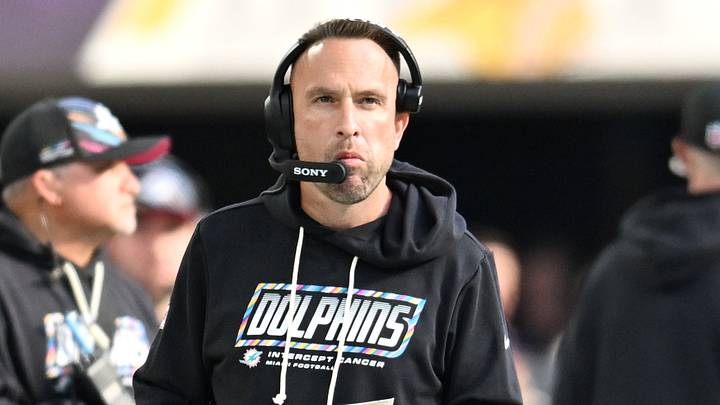
The Miami Dolphins are off to a 0–4 start for the first time since 2019 — coincidentally (or not), that was the last time they embarked on a massive rebuilding project that entailed stripping the roster to the bone. Many will point out that there are no moral victories in football, and that's true. Nonetheless, there is nuance in everything.
In order to assess new head coach Jeff Hafley's Dolphins, we must dig deep beneath the surface. Plenty of great head coaches have started their careers with rough first seasons. The thing is, with every promising football coach or player, there are glimpses.
Through four weeks, Hafley's defenses — his specialty — have been showing signs of development in particular. The Dolphins have had 12 full-time head coaches in their history. Today, we're going to explore how the first month of the season went for each of them defensively, using it to help put Hafley's start into perspective.
Mimai Dolphins defensive retrospective indicates Jeff Hafley and his defense are punching above their weight in 2026
If the NFL were a country, its currency would be yards. In this crude metaphor, Dolphins players would be walking the streets due to the offense's ineffectiveness through the first quarter of the season, save for Malik Washington, that is. In any case, yards allowed are a valuable tool for capturing how penetrable a defense is.
Where Hafley's unit ultimately stands is honestly impressive considering the personnel he has to work with.
1. Dave Wannstedt (2000) – 1,083 yards allowed
2. Jimmy Johnson (1996) – 1,087 yards allowed
3. Nick Saban (2005) – 1,118 yards allowed
4. Tony Sparano (2008) – 1,155 yards allowed
5. Don Shula (1970) – 1,205 yards allowed
6. Jeff Hafley (2026) – 1,342 yards allowed
7. George Wilson (1966) – 1,373 yards allowed
8. Cam Cameron (2007) – 1,377 yards allowed
9. Joe Philbin (2012) – 1,418 yards allowed
10. Adam Gase (2016) – 1,607 yards allowed
11. Mike McDaniel (2022) – 1,612 yards allowed
12. Brian Flores (2019) – 1,888 yards allowed
There are definitely some interesting takeaways from that list. For one, head coaches usually get fired for failing to meet expectations. For Miami, however, two of those coaches — Don Shula and Jimmy Johnson — retired, leaving strong teams behind when they walked away. That helps explain Johnson and Dave Wannstedt's jaw-dropping starts to their tenures.
Conversely, coaches like Nick Saban, Tony Sparano, and Don Shula took over truly repugnant teams and were aided in their turnarounds with high draft picks and an influx of new talent to help in their inaugural campaigns. Cam Cameron, Joe Philbin, Adam Gase, and Mike McDaniel faced similar circumstances to each other in that the teams they inherited were at least mediocre, which is certainly a challenge in itself, though it helps raise the floor of the team considerably.
Then there's the bravest group of all: George Wilson, Brian Flores, and Jeff Hafley. Wilson took over an expansion franchise that had to come together over just one offseason. Flores and Hafley may as well have done the same. These are the three coaches who entered a season with a proverbial hand tied behind their back... and a blindfold for good measure.
What's interesting is that, while Wilson's and Flores' teams struggled mightily as expected, Hafley's been able to coax respectable performances out of the band of rookies, misfit toys, and sprinkled-in veterans that he and general manager Jon-Eric Sullivan cobbled together. To sit in the middle of the pack, with one of the worst units any of those coaches has had to work with, is an accomplishment worth noting.
Unfortunately, Hafley's unit hasn't fared quite as well in limiting points, though the defense still sits squarely in the mix.
1. Dave Wannstedt (2000) – 22 points allowed (5.5 points per game)
2. Don Shula (1970) – 56 points allowed (14 points per game)
3. Jimmy Johnson (1996) – 57 points allowed (14.3 points per game)
4. Nick Saban (2005) – 71 points allowed (17.8 points per game)
5. Tony Sparano (2008) – 74 points allowed (18.5 points per game)
6. Adam Gase (2016) – 89 points allowed (22.3 points per game)
7. Joe Philbin (2012) – 90 points allowed (22.5 points per game)
8. Mike McDaniel (2022) – 91 points allowed (22.8 points per game)
9. Jeff Hafley (2026) – 101 points allowed (25.3 points per game)
10. Cam Cameron (2007) – 119 points allowed (29.8 points per game)
11. George Wilson (1966) – 144 points allowed (36 points per game)
12. Brian Flores (2019) – 163 points allowed (40.8 points per game)
At the end of the day, games are decided by which team has more points when the final whistle blows. Hafley himself has acknowledged that the defense hasn't been good enough. Still, he has been able to slow down and at least put up a fight against some of the league's brightest minds.
Klint Kubiak coordinated the third-ranked offense with the Seattle Seahawks in 2025 before taking over the Las Vegas Raiders this year. Andy Reid's resume is sparkling, and with the return of Patrick Mahomes, the Kansas City Chiefs have again become a force to be reckoned with. The San Francisco 49ers' head coach, Kyle Shanahan, is widely considered the gold standard of offensive playcalling, and Minnesota Vikings head coach Kevin O'Connell came from the same tree.
This is all to say, it's not like the Dolphins drew an easy schedule to start with in 2026. In fact, Miami's opponents are 15–1 on the year. Jeff Hafley has still managed to keep his team in the game in most of those contests. While Week 4 is hardly the finish line, there's reason for optimism going forward. Now, if only Hafley could start working some of his magic on offense...
 Add us as a preferred source on Google