

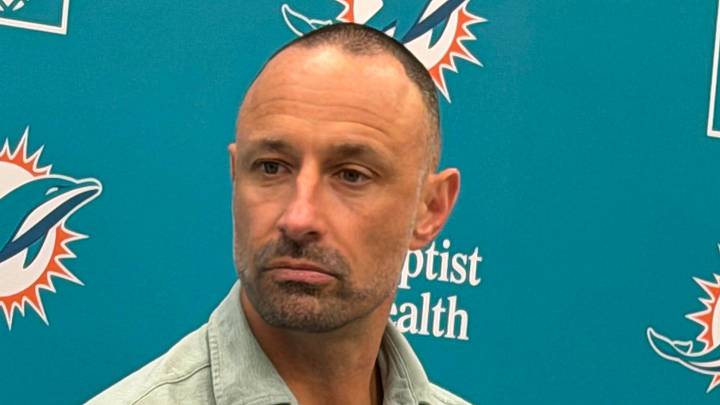
When Mike McDaniel was the head coach of the Miami Dolphins, he frequently invoked a coaching tenet that could apply in all walks of life. Process over results. It's no secret that the best plays are the ones that work and the best teams are the ones that win. However, just because something didn't produce the optimal outcome doesn't inherently make it the wrong decision.
Say it's third and inches in a tight ballgame at the two-minute warning. The other team has no timeouts, and one first down will effectively end the game. You're at the controls, and you dial up a quarterback sneak (or maybe a tush push?). It fails. Was the process wrong? Not necessarily. Most plays gain at least one yard, especially a QB sneak from under center. The process was logical, even if the result failed.
The Miami Dolphins can't let past failures doom future decisions
The same lesson can be gleaned from the Los Angeles Rams' decision to go all in, trading a king's ransom for the Cleveland Browns' Myles Garrett. The Dolphins tried that once, as I'm sure you all remember too well. They sent a bounty of picks to the Kansas City Chiefs for wide receiver Tyreek Hill in March of 2022. The season was going so well that eight months later, Miami went back to the trade market and nabbed Bradley Chubb.
Those deals cost the Dolphins seven draft picks in all, though they did get a fifth-rounder back in the Chubb move. Does that inherently make them wrong? It's hard to say. Tyreek Hill set records in Miami. Bradley Chubb was rock-solid on the field, though he suffered a severe injury that hampered his production down the line. It might be somewhat controversial, but the moves made sense then. Even as the dust settled on the all-in gamble without a Lombardi Trophy, a case could be made that the process was right even if the results failed.
It's easy to sit back and judge a move years down the line. Obviously, if Chris Grier knew Bradley Chubb would tear his ACL about a year after inking a $100+ million contract, he'd change course. You can't know these things in advance, though. Realistically, these moves were major parts of the Dolphins having their best season since 2016.
The statistic that fans are beyond tired of hearing about — that the Dolphins' last playoff win came in the year 2000, or 9,286 days ago — is impossible to stomach no matter how you slice it. It's truly unsightly. If this new regime has any chance of changing that reality, however, they can't be scared off from being bold when the opportunity arises, so long as the time is right.
Make no mistake, I am not advocating that the Dolphins should've been in on the Myles Garrett or A.J. Brown sweepstakes. This is a rebuild year through and through. Neither of those players makes sense for the Miami Dolphins in 2026. The key takeaway from the Rams' courage is not to fear failure. Los Angeles' most successful franchise is the poster boy for going all in. Their Super Bowl LVI victory attests to that reality.
But remember, process over results. Even if Matthew Stafford hadn't delivered a Super Bowl win, and even if Myles Garrett doesn't get them back to the big game in 2026, it wouldn't make either move a failure. Bravery is always to be commended, as long as it doesn't veer into recklessness. The Rams are a team with sensible contending aspirations. That makes them a prime candidate to go for broke.
When the Dolphins (I'm speaking it into existence) get back to being contenders, Jon-Eric Sullivan needs to be willing to be bold. Past performance is not indicative of future results, and Miami needs its GM to grasp that to the fullest extent. The Dolphins will be sitting on the sidelines for the big splashes this year, but in the NFL, things can change in a hurry.
Don't be surprised if they're positioned for success sooner than expected — starting with shocking the doubters in 2026.
 Add us as a preferred source on Google